

Home energy storage is a battery system that stores electricity so you can use it later. When it is paired with rooftop solar, it can hold surplus daytime generation for the evening or overnight, which may reduce the electricity you buy from the grid.
If you are looking at rooftop solar and battery storage for your home, it helps to understand how the equipment actually behaves and where bill savings come from. This guide explains how a home battery works in a grid-connected Australian home, how stored energy is used, which factors decide the financial result and how to estimate your own numbers without relying on a headline figure.
Quick answer
- A home battery stores electricity, usually surplus solar, and releases it when your solar output drops or your demand rises.
- Savings come from replacing grid electricity you would otherwise buy. They are reduced by energy losses and by any export credit you give up by storing solar instead of exporting it.
- The result depends on your import tariff, export credit, household usage, solar system, battery capacity and power output, and the plan you are on.
- A battery does not remove your electricity bill, and ordinary grid-connected systems do not automatically provide blackout backup.
- No saving, payback period or rebate is guaranteed. Use your own bill and plan details to estimate the benefit.
What is home energy storage?
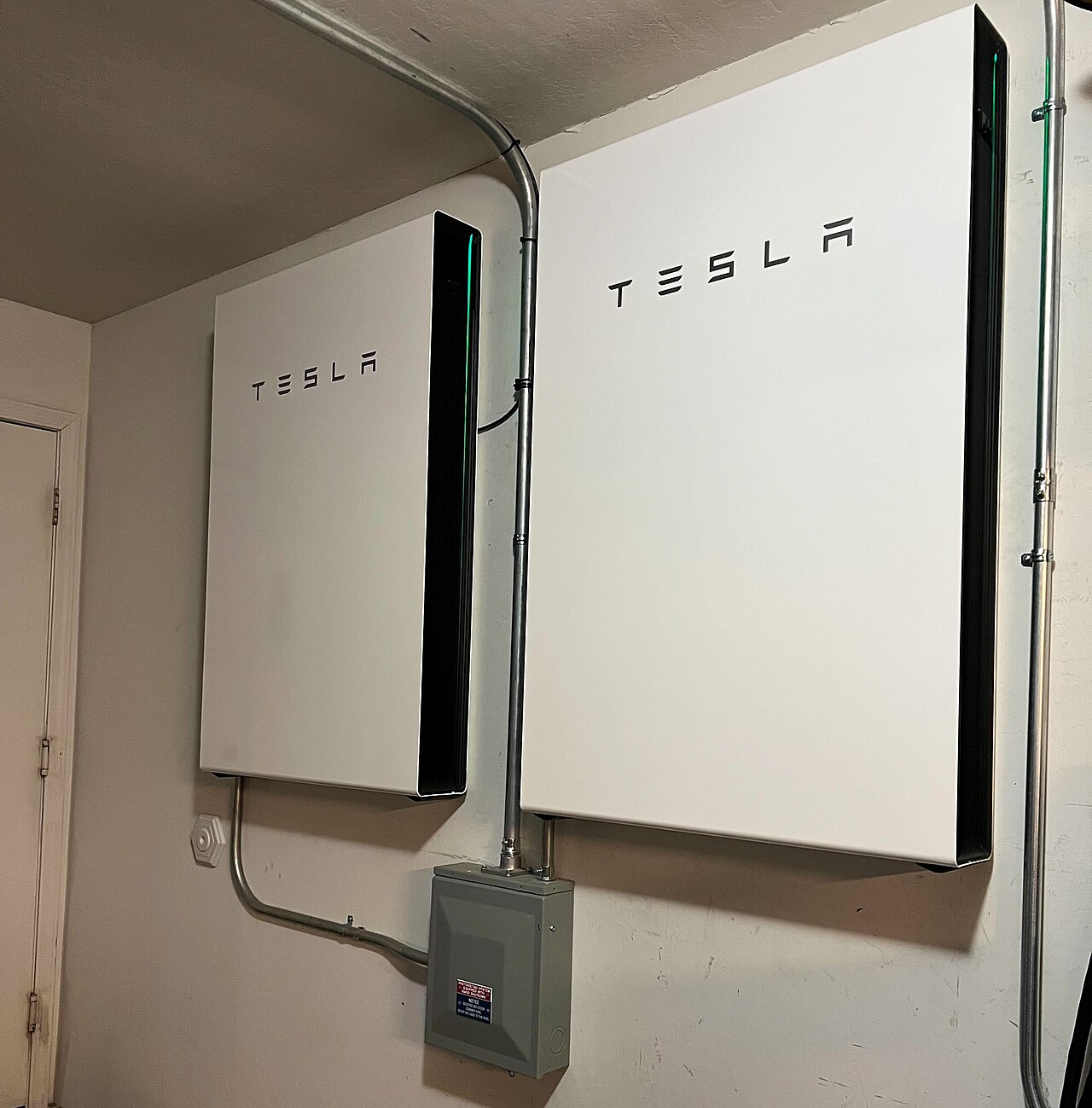
Home energy storage usually means a rechargeable battery, a compatible inverter and the control and protection equipment that connects them to your home’s electrical system. The battery holds energy measured in kilowatt-hours (kWh) and can supply power measured in kilowatts (kW).
In most Australian homes the battery is charged from rooftop solar. Depending on the settings and your electricity plan, it can also be charged from the grid. It is a way of moving electricity from the time it is made or cheap to the time you need it.
How does home energy storage work?
In a typical grid-connected home with rooftop solar and a battery, the sequence looks like this:
- Solar panels generate electricity during daylight.
- Appliances in the home use the available solar power first.
- Surplus solar can charge the battery.
- Later, when solar output falls, the battery can supply household loads.
- If solar and battery energy are not enough, the home imports electricity from the grid.
- Surplus solar can be exported to the grid, subject to your system, your electricity plan and network requirements.
The exact order of priorities depends on the inverter configuration, battery settings, household demand, tariffs and network rules. Some systems can be set to hold a reserve, charge from the grid at certain times or limit exports. A battery does not mean you stop importing electricity or end up with a zero bill.
Main components of a home energy storage system
A complete system is more than a battery on a wall. Each part affects performance, safety and the value you get from the equipment.
| Component | Main function | Why it matters to the household |
|---|---|---|
| Battery storage unit | Stores electrical energy for later use | Its usable capacity and power rating set how much you can shift and which loads it can run |
| Solar or battery inverter | Converts power between DC and AC and manages flows | Compatibility and power limits decide how the battery works with your solar |
| Hybrid inverter (where used) | Combines solar and battery control in one unit | Often used in new installs, and may mean replacing an older inverter on a retrofit |
| Battery management system | Monitors cells, controls charging and enforces safety limits | Protects the battery and sets the rules for how it can be used |
| Monitoring and energy management | Shows generation, usage and battery activity | Lets you see whether the battery is doing what you expected |
| Protection and switchboard equipment | Isolates and protects circuits | Safe, compliant connection may require switchboard work |
| Metering and grid connection | Measures imports and exports and links the home to the network | Network rules and metering can affect export limits and billing |
| Backup equipment (where installed) | Supplies chosen circuits during an outage | Only systems designed for backup can keep selected loads running in a blackout |
What happens to solar electricity during the day?
During daylight your home uses solar power directly. If the panels produce more than the home needs, the surplus can go into the battery until it is full or reaches its charging limit. Once the battery is full, the remaining surplus can be exported, where your system and plan allow it.
What actually happens at any moment depends on:
- Household electricity consumption at that time.
- Solar system output, which changes with weather and season.
- Battery charging capacity (how fast it can accept energy).
- Battery state of charge.
- Inverter and system limits.
- Export arrangements and network restrictions.
Here is a simple, illustrative scenario. A household that is out during the day has little demand at midday, so most of its solar output is surplus. A battery can absorb part of that surplus for the evening, when the family returns and demand rises. A household that works from home might use much more solar directly, leaving less surplus to store. The same battery would behave differently in each home. This scenario shows the principle and is not a typical result.
For a plain-language look at what powers a home after sunset, see our article on what happens to your solar power after the sun goes down.
How is stored electricity used at night?
When solar production drops in the late afternoon, the battery can supply some of your evening and overnight demand, such as lighting, cooking, heating or cooling, entertainment and refrigeration. How far the stored energy goes depends on:
- Evening appliance usage.
- Overnight loads that keep running.
- Usable battery capacity.
- Battery discharge power.
- Reserve settings you or the installer have configured.
- Energy lost in charging and discharging.
- Grid imports when stored energy runs out.
Energy (kWh) versus power (kW)
Energy capacity in kWh is how much electricity the battery can hold, like the size of a fuel tank. Power in kW is how much it can deliver at one moment, like how fast fuel can flow. A battery with a large kWh figure but a modest kW rating may not run several high-demand appliances at the same time. When demand exceeds what the battery can deliver, the extra is drawn from the grid.
What can home energy storage save on electricity bills?
A battery can affect your electricity costs in a few ways:
- Reducing grid purchases: stored solar replaces some electricity you would otherwise buy.
- Shifting use to higher-priced periods: stored energy can cover the hours when grid electricity costs more.
- Reducing exposure to some time-of-use charges: where your tariff has peak pricing, using stored energy at those times can help.
- Eligible VPP or demand-response programs: some households earn credits or payments, depending on the offer and its conditions.
There is a trade-off. Without a battery, surplus solar is exported and may earn a credit. With a battery, you store it and may avoid buying electricity later. The financial value depends on the import tariff, the export credit, the battery’s efficiency, how it is used and other charges on your plan. The benefit is only real to the extent that stored energy actually replaces grid electricity you would otherwise have purchased. The same kilowatt-hour cannot be counted as both an export credit and an avoided purchase.
What factors determine home battery savings?
| Factor | What it means | How it affects savings |
|---|---|---|
| Electricity import tariff | The price you pay for grid electricity, which may vary by time of day | Avoiding a higher-priced period is worth more than avoiding a lower-priced one |
| Solar export credit | What you are paid for exporting surplus solar | Storing solar means giving up that credit, so it counts against the benefit |
| Household consumption pattern | When you use electricity during the day and night | Homes with strong evening demand tend to use stored energy differently from homes that use most power by day |
| Solar generation and surplus | How much your panels produce beyond what the home uses | Little surplus means little to store, especially in winter or on cloudy days |
| Usable capacity | The portion of the battery you can actually use, which can be lower than the nominal figure | Planning around nominal capacity can overstate what you will use |
| Round-trip efficiency | The share of energy you get back after charging and discharging | Losses mean you recover less than you stored |
| Battery power output | How much power the battery can deliver at once | Limits which loads it can cover at a given moment |
| System cost and degradation | Installed price, service costs, warranty terms and capacity loss over time | These set how long it takes, if ever, for savings to cover the cost |
| Incentives and financing | Rebates you qualify for and the cost of any finance | They change the net price and the overall outcome |
| Electricity plan changes | Tariffs and export credits can change over time | Future savings may be higher or lower than today |
Why the export credit matters
If your plan pays a meaningful credit for exported solar, then each kilowatt-hour you store has an opportunity cost. If the credit is low, the opportunity cost is small. This is why two households with identical batteries can see very different financial results. Our article comparing a solar battery and a feed-in tariff looks at this trade-off in more detail.
Usable capacity and efficiency
Manufacturers publish both nominal and usable capacity, and usable capacity is the figure that matters for planning. Round-trip efficiency, in plain English, is the percentage of energy you get out compared with what you put in. If a battery has a 90 per cent round-trip efficiency, storing 10 kWh returns about 9 kWh. Always check the manufacturer’s documentation for the specific model.
Grid electricity versus stored solar energy
Comparing the two sources side by side shows what a battery changes in practice.
| Aspect | Electricity from the grid | Stored solar from your battery |
|---|---|---|
| Cost to you | Charged at your import tariff, which may vary by time of day | No energy charge at the time of use, but it carries the forgone export credit and any losses |
| Availability | Generally available, subject to outages | Limited by what was stored and the battery’s power rating |
| Source | Mix of generation on the electricity network | Solar generated at your home, or grid energy if you have charged from it |
| Backup in an outage | Not available during a blackout | Only available if the system is designed and configured for backup |
| Control | Set by your retailer and plan | Depends on your battery settings and any VPP participation |
How to estimate your potential savings
You can work out an estimate using your own bill and plan. The framework is simple:
Net battery benefit equals avoided grid electricity costs, minus forgone solar export credits, minus relevant charging and operating costs.
This is a simplified framework, not a full financial model for every tariff or battery arrangement. A thorough analysis should also account for energy losses, degradation, financing, installation cost, available incentives and the period you are assessing.
A worked example using hypothetical numbers
The figures below are hypothetical and chosen only to show the method. They are not Australian averages, current tariffs or a typical outcome. Replace them with the rates and usage from your own bill.
| Step | Hypothetical input or calculation | Result |
|---|---|---|
| Surplus solar stored in the battery | Assumed input | 8 kWh |
| Round-trip efficiency | Assumed input | 90 per cent |
| Energy available for use later | 8 kWh x 90 per cent | 7.2 kWh |
| Import rate you avoid paying | Assumed input | 40 cents per kWh |
| Avoided grid electricity cost | 7.2 kWh x $0.40 | $2.88 |
| Export credit you give up | Assumed 5 cents per kWh x 8 kWh stored | $0.40 |
| Net benefit for that one day | $2.88 minus $0.40 | $2.48 |
This covers one hypothetical day only. Do not multiply it by 365, because surplus solar, household usage and weather change across the year. The example also leaves out degradation, financing, installation cost and any other charges on the plan.
Checklist for estimating your own savings
| What to find | Where to look | Why you need it |
|---|---|---|
| Your import rates and time-of-use periods | Your electricity bill or retailer plan documents | Shows what each avoided kWh is worth |
| Your solar export credit | Your bill or plan documents | Sets the opportunity cost of storing solar |
| When you use electricity | Your smart meter data or retailer app | Shows how much evening demand a battery could serve |
| How much surplus solar you export | Your bill or monitoring app | Shows how much energy is available to store |
| Battery usable capacity, power and efficiency | The manufacturer’s datasheet | Lets you apply realistic limits and losses |
| Installed price and incentives | Written quotes and official sources | Sets the net cost you are trying to recover |
You can compare retail plans using the government’s Energy Made Easy comparison service.
Does a home battery reduce the entire electricity bill?
No. A battery can reduce some grid imports, but it may not remove:
- Daily supply charges.
- Electricity used when the battery is empty.
- Loads that exceed the battery’s available power.
- Costs linked to certain tariffs or network arrangements.
- Usage outside what the battery can cover.
The result depends on the retailer, the tariff, the equipment and household consumption. Be wary of any claim of a guaranteed zero bill.
Is a bigger battery always better?
No. Battery size should reflect household demand, surplus solar, any backup loads you want to support, your tariff and your budget. A battery that you rarely fill or empty does not earn its extra cost. Because of energy losses and fixed costs, doubling the battery does not double the savings. Capacity (kWh) and power (kW) are also different, so a larger battery does not necessarily run more appliances at once.
For a closer look at matching a battery to a household, read how to choose the right solar battery.
What does home energy storage cost?
The installed price depends on several things:
- Battery model and capacity.
- Inverter requirements.
- Whether you already have solar equipment.
- Electrical work and switchboard upgrades.
- Backup equipment.
- Installation complexity.
- Monitoring and commissioning.
- Other required equipment.
Prices change often, and quotes are not always comparable because inclusions differ. Compare complete installed quotes that state the battery capacity, what is included, whether GST is included and whether incentives have been deducted. We cover current price ranges in our guide to solar battery cost in Australia.
How long might it take for savings to offset the cost?
Payback is the time it takes for accumulated savings to cover the net upfront cost. There is no universal answer. A credible estimate compares the net investment with the expected annual benefit, and accounts for:
- Installed cost.
- Incentives actually available to you.
- Annual battery-related savings.
- Energy losses.
- Degradation.
- Maintenance or service costs.
- Financing costs.
- Changing tariffs.
- Warranty terms and expected service life.
Treat any payback figure as an estimate, because actual results can differ. If an installer provides one, ask for the assumptions and the source of each input. Battery longevity is part of the picture, so see how long a solar battery lasts.
Can home energy storage provide backup during a blackout?
Not automatically. Many grid-connected solar and battery systems switch off when the grid goes down, as a safety measure, unless they are designed for backup. If blackout protection matters to you, ask about:
- Whether the inverter or system is backup-capable.
- Any additional backup equipment required.
- Essential circuits versus whole-home backup.
- Battery reserve settings.
- Power output and the starting loads of appliances.
- Expected runtime and available energy.
- Whether solar can recharge the battery during an outage.
Do not assume uninterrupted power or whole-home backup. Confirm in writing what the specific configuration supports.
How do electricity tariffs and VPPs affect savings?
Time-of-use tariffs, import rates, export credits and retailer offers all influence what a battery is worth. A tariff with a big gap between peak and off-peak prices may reward shifting energy more than a flat tariff would, but no single tariff is best for everyone.
A virtual power plant (VPP) links many home batteries so they can be coordinated as a group, for example to support the grid at busy times. VPP offers can differ in how you are rewarded:
- Payments: cash paid to you.
- Bill credits: a reduction on your electricity account.
- Conditional incentives: rewards that depend on meeting set requirements.
- Market-linked or variable rewards: amounts that change with market conditions.
Check the contract conditions, who controls battery dispatch, the reserve settings and how participation affects your backup availability. We explain how this works in our article on whether a solar battery can earn money through a VPP in NSW.
Current Australian rebates and incentives
The federal Cheaper Home Batteries Program, run by the Australian Government and delivered through small-scale technology certificates, reduces the upfront cost of eligible home batteries. The Department of Climate Change, Energy, the Environment and Water publishes the program details, which include requirements for the battery product and the installer.
The Clean Energy Regulator says that from 1 May 2026 the support is tiered by battery size: the full certificate factor applies to the first 14 kWh, 60 per cent applies above 14 kWh up to 28 kWh and 15 per cent applies above 28 kWh up to 50 kWh. It also says the rebate depends on the installation date, not the date you sign the contract. See the regulator’s notice on battery rebate changes from 1 May 2026.
A few points to keep in mind:
- Not every household or installation will qualify, so check eligibility before you rely on a discount.
- State and territory offers differ and change often, and some have closed. Check your state government’s current information.
- A government rebate is different from a loan, a retailer offer, a VPP payment or an installer discount.
- Whether programs can be combined depends on the rules of each one.
- The discount lowers the price you pay but does not guarantee the purchase is financially worthwhile.
For more detail, see our guide to the Cheaper Home Batteries Program in 2026 and our solar battery rebate calculator.
Practical ways to improve the value of home energy storage
- Understand your household consumption profile before you choose a battery.
- Compare import tariffs and export credits across plans.
- Run suitable appliances, such as dishwashers or laundry, when solar is available, where it is safe and practical.
- Choose a battery size that suits your usage and surplus solar.
- Check inverter compatibility, especially if you already have solar. Our article on adding a battery to an existing solar system explains the options.
- Review your monitoring data regularly.
- Understand your battery reserve and operating settings.
- Compare complete installed quotes.
- Verify current incentives before you buy.
Leave all electrical work to licensed professionals. Do not attempt to modify wiring, switchboards or battery connections yourself.
Common misconceptions about home batteries
| Misconception | What is actually true |
|---|---|
| A battery eliminates electricity bills | Supply charges and grid imports can remain, depending on your usage and plan |
| A larger battery always saves more | Savings depend on how much energy you can actually charge and use, not on size alone |
| Every home battery provides blackout protection | Only systems designed and configured for backup can supply power in an outage |
| Stored solar is free of opportunity cost | Using surplus solar to charge a battery can mean giving up an export credit |
| Every household gets the same savings | Tariffs, usage, solar output and equipment all vary |
| A rebate guarantees a worthwhile investment | A rebate reduces the price but does not guarantee a financial return |
| Every battery works with every inverter | Compatibility has to be confirmed for the specific equipment |
| Advertised savings are guaranteed | They rely on assumptions that may not match your household |
Frequently asked questions
What is home energy storage?
Home energy storage is a battery system that stores electricity for later use in your home. With rooftop solar, it can hold surplus daytime generation for use when your panels are producing less.
How does home energy storage work in Australia?
In a grid-connected home, solar powers your appliances first, surplus can charge the battery, the battery can supply the home later and the grid fills any gap. Exports and imports follow your system settings, electricity plan and network rules.
How much can a home battery save on electricity bills?
It depends on your import tariff, export credit, usage pattern, solar surplus, battery size and efficiency, and no standard figure applies to every home. Estimate your own result by subtracting forgone export credits and costs from avoided grid purchases.
Does a home battery save money without solar panels?
It can only do so if it is charged from the grid at cheaper times and used when electricity costs more, which depends on your tariff and the battery’s efficiency and cost. Our article on installing a home battery without solar explains the considerations.
Can a home battery eliminate electricity bills?
No. Supply charges usually remain, and you may still import electricity when the battery is empty or demand is high. A battery can reduce some grid purchases, not remove the bill.
How do solar export credits affect battery savings?
When you store solar instead of exporting it, you give up the export credit. The higher the credit, the less extra value storing it adds. The net benefit is the avoided import cost minus the forgone credit and other costs.
How do I estimate my battery’s payback period?
Divide the net upfront cost, after incentives, by the expected annual net benefit, then adjust for losses, degradation, financing and tariff changes. The result is an estimate, not a guarantee.
Is a bigger home battery always better?
No. A larger battery costs more and only pays off if you can charge and use it regularly. Size it to your evening usage, surplus solar, backup needs and budget.
Does a home battery work during a blackout?
Only if the system is designed for backup. Many grid-connected systems shut down in an outage. Ask which circuits are covered, the power output and whether solar can recharge the battery.
Are home battery rebates available in Australia?
Yes, the federal Cheaper Home Batteries Program offers support for eligible batteries, with tiers by battery size from 1 May 2026. Eligibility, installer requirements and state programs vary, so check the official sources and your quote.
How can I tell whether a battery is right for my household?
Look at your evening and overnight usage, how much solar you export, your tariff and export credit, your budget and whether you want backup. A site assessment and a complete installed quote will give you a firmer view.
Your next step
Before you decide, gather your recent bills, check your import rates and export credit, look at your usage pattern and confirm whether your existing equipment is compatible. Then compare complete installed quotes and the incentives you can actually claim, rather than the headline price or an advertised saving.
If you would like advice built around your home and electricity use, you can book a free assessment with UR Local Solar or explore our solar battery systems. If you are weighing up a new system, our guide to buying solar panels and a battery together may also help.